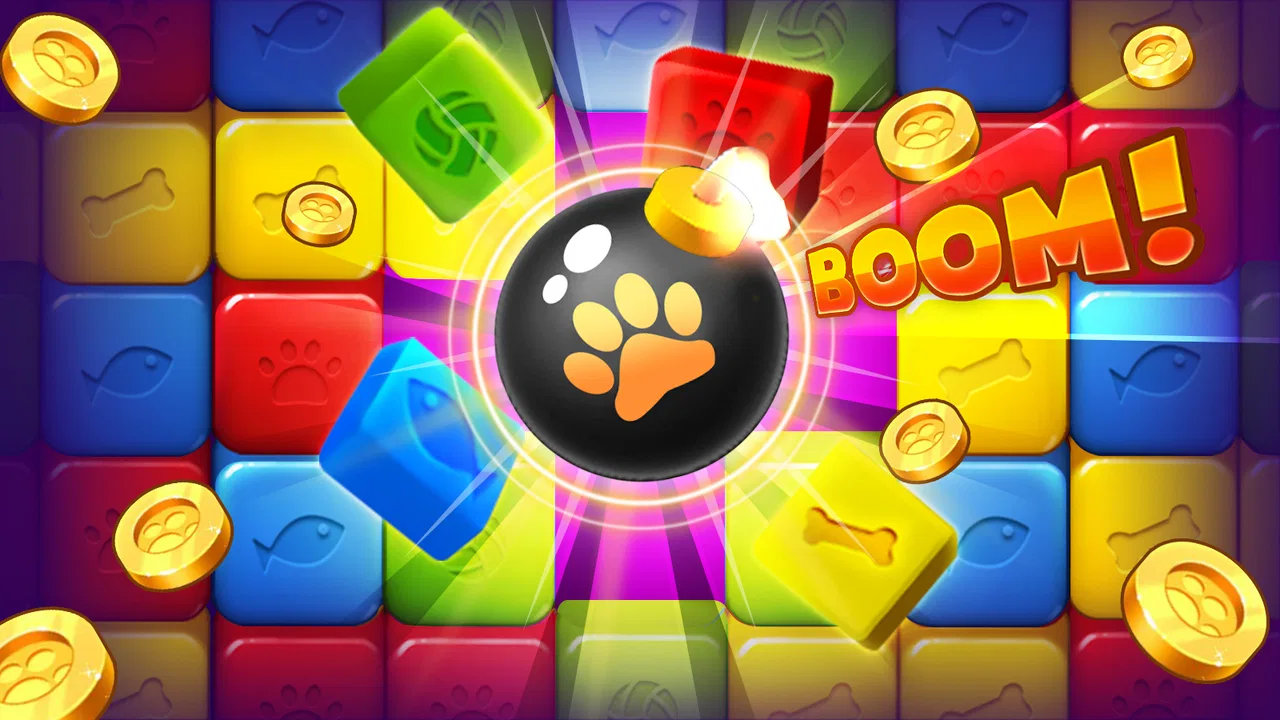
Puzzle Pop Blaster
- 4.6
- Rating
- 1.00M
- Installs
- Free
- Price

 Analysis by App-foxy
I picked up Puzzle Pop Blaster expecting a quick, uncomplicated puzzle game, and that is exactly where it fits best. It is a casual title from Gimica GmbH, built for short sessions rather than a long story, complicated controls, or a demanding competitive routine. The basic appeal is easy to understand: open the game, look for a useful move, clear pieces, and enjoy the small satisfaction of making progress.
That simplicity is its strongest quality, but it also sets a clear expectation. This is not the game I would choose when I want a deep strategy system or a rich adventure. I would choose it when I have a few spare minutes, want something familiar immediately, and do not want to study a tutorial before playing. The game is free to install, rated for Everyone, and has attracted over a million installs, so it is clearly aimed at a broad audience rather than a narrow group of puzzle specialists.
What to expect when you begin
The first thing I noticed is how little preparation the game asks from the player. Its store category is casual, and that description feels accurate in practice: the focus is on puzzle interaction and quick entertainment, not on building a character, managing an inventory, or learning a large set of rules. The short store description calls it “Puzzle Pop,” while the fuller summary presents it as a casual puzzle experience. I found the shorter description more useful as an expectation: this is designed to get out of the way and let the puzzle take over.
You May Also Like

 Blood Strike: 2.5 Anniversary
Blood Strike’s Loadouts Turn Every Drop Into a Tactical Gamble
A close look at Blood Strike’s custom loadouts: how fast access to signature weapons reshapes its battle royale rhythm, rewards preparation, and narrows the gap between fights.

 Pandora - Music & Podcasts
Pandora’s Music Is Easy to Start, but Harder to Recover
Pandora’s strength is its low-effort path from a seed to a station. Its weak spot is how much confidence it asks you to place in connection, setup, and quiet recovery.

 8 Ball Pool
 Is Built on Rivalries, Rematches, and Routine
A close look at the rivalries, rematches, shared routines, and unanswered safety questions that turn a quick pool match into a persistent mobile community.

 Samsung Music
’s Quiet Strength Is Playing What You Already Own
Its reach comes less from spectacle than from dependable access to a personal library. That simplicity is both the app’s strongest retention engine and its ceiling.

 AccuWeather: Weather Radar
AccuWeather Review: A Quick, Clear Forecast for Everyday Decisions
For everyday plans, the best forecast is the one you can understand quickly. AccuWeather makes rain timing, radar, and local conditions easy to act on, with a few trade-offs.

 Hill Climb Racing
Why Hill Climb Racing Still Turns Crashes Into One More Run
A tiny car, a bumpy hill and one more upgrade: Hill Climb Racing keeps resurfacing because its simple chaos makes every near-miss feel personal.
More From Our News Desk
View All News


For a first-time player, that means the opening minutes are best approached without trying to optimize everything. I recommend looking at the whole board before tapping. Instead of immediately choosing the first obvious group, take a moment to see whether one move can open space or create a more valuable follow-up. That small pause is the first meaningful habit to develop, because casual puzzle games often reward seeing the next move rather than reacting only to the current one.
The game works particularly well as a waiting-room or travel companion. I can imagine opening it while waiting for an appointment, playing a little during a break, and putting it down without feeling that I have abandoned a complicated task. It also suits players who prefer visual, touch-based challenges to word puzzles or timed action. On the other hand, anyone looking for a strong narrative, elaborate progression, or a highly demanding brain-training experience may find the presentation too light.
Its broad age rating makes it approachable for families, although I would still treat the in-app purchase system as something adults should understand before handing the device to a child. The game itself is free, while individual in-app purchases range from $2.99 to $11.99. That does not make it unsuitable for younger players, but it does make device purchase controls worth checking in advance.
Getting through the first setup
On Android, the listed minimum operating-system requirement is version 7.0, which covers a wide range of devices. After installing, my advice is to start with a clean, distraction-free session rather than immediately searching for the fastest possible route through the game. The goal of the first launch is simply to understand how the board responds to a tap or selection and what the game considers a successful clearing action.
I would also begin with the sound at a comfortable level and avoid playing while multitasking during the first few minutes. That sounds minor, but puzzle feedback is easier to understand when you can see the board change clearly and notice whether a move triggers anything beyond the pieces you selected. Once the interaction feels familiar, the game becomes much easier to use one-handed or in short bursts.
There is no advantage in treating the first session like an exam. If a move does not produce the result you expected, use it as information. Casual puzzle games often communicate their rules through animation and board changes rather than long explanations. Watching that response is more useful than repeatedly tapping at random, especially when the board begins to offer several possible groups.
One practical tip is to rotate your attention between the lower and upper parts of the board. Players naturally stare at the most colorful or largest visible group, but the better move may be elsewhere because clearing one area can change what falls or becomes available. Even without advanced systems, this scanning habit reduces impulsive moves and gives the game a more thoughtful rhythm.
Your first meaningful success
I define the first meaningful success as more than simply making the first tap. It is the moment when you deliberately choose a move because you understand what it should improve: opening a blocked-looking area, removing a crowded section, or setting up a larger clearing opportunity. That first intentional decision makes the game feel less like random tapping and more like a puzzle.
For a new player, I suggest using this simple sequence. First, identify every immediately available group instead of stopping at the first one you notice. Next, compare the size and position of those groups. Finally, choose the move that leaves the board easiest to read, not necessarily the one that clears the most pieces at once. A slightly smaller clearing can be better if it exposes more useful choices afterward.
This approach is especially helpful on a phone, where the board can feel visually compact. I found that rushing because a move looks obvious is the easiest way to lose control of the session. Taking an extra second makes the game calmer and helps you learn its visual language. That is a useful distinction between playing casually and playing carelessly.
Another good early habit is to avoid spending any purchase currency or paid boost immediately, if the game presents such an option during play. First learn whether you actually need assistance. A player who understands the board may get more value from saving help for a genuinely awkward situation than using it simply because it is available. Since purchases are sold individually, restraint is also the sensible way to keep a free game feeling free.
Where new players can become confused
The biggest source of confusion is usually not the puzzle itself but the difference between a move that looks attractive and a move that improves the next position. Bright colors and large groups naturally draw attention, yet the most useful action may be the one that changes the board’s shape. When I catch myself tapping only because something is visually prominent, I stop and inspect the surrounding pieces again.
Another common mistake is assuming that every available move has the same value. In a casual game, it is tempting to clear whatever is easiest and move on. That works for immediate progress, but it can make later choices less comfortable. I prefer to preserve a few options when possible, especially if a move near the center or lower portion of the board can influence several areas at once.
Players may also wonder whether they should replay a section after an imperfect move. My answer is yes when the goal is learning, but not necessarily when the goal is relaxation. Replaying can reveal how an early choice changed the rest of the board, which is useful for improving pattern recognition. However, repeatedly chasing a perfect result can turn a light game into a frustrating routine. The right balance depends on whether you are playing for progress or simply passing time.
The purchase prompts deserve a similar practical explanation. Free access makes the game easy to try, but the presence of optional purchases means the experience is not the same as a completely purchase-free toy. I would not recommend buying anything until you know what problem it solves for your own play style. If you are comfortable restarting or accepting an imperfect result, you may never need to spend money. If you dislike being blocked by a difficult moment, set a personal limit before playing.
Version 1.8.1 is the current version listed for the game. I would keep the app updated through the normal device store process, particularly if a visual interaction ever seems inconsistent. I would not treat an update number as a reason to expect a completely different game, though; the core appeal remains quick, accessible puzzle play.
How it compares with familiar casual puzzle choices
Compared with match-style puzzle games that emphasize elaborate levels, characters, or a long progression path, Puzzle Pop Blaster feels more direct. That can be a benefit when I want to play without committing to a large system of missions and rewards. The trade-off is that players who enjoy collecting, upgrading, or following a story may find fewer reasons to stay engaged for a long uninterrupted session.
Compared with minimalist block or number puzzles, it is easier to approach visually because the objective is presented through pieces and clearing actions rather than calculations. That makes it a friendlier choice for a mixed-age household or for someone who does not enjoy wordplay. Yet a number puzzle may be the better alternative for a player who wants every move to involve rigorous planning and a clearly measurable long-term solution.
It also differs from fast arcade games because the pressure is lower. I can pause mentally between decisions instead of relying on reflexes. That makes it a good fit for tired evenings or short breaks, but not for someone who wants constant motion, rapid reactions, or a strong adrenaline loop. Knowing that distinction before installing it prevents disappointment.
Small strategies that make short sessions better
My first useful strategy is to scan for chain potential rather than focusing only on immediate size. If clearing one group can reveal or connect another useful area, that move deserves more attention than an isolated group of similar size. This is the kind of decision that turns a two-minute session into a satisfying little problem instead of a sequence of automatic taps.
My second strategy is to leave the board readable. When several moves are available, I prefer the one that creates a clear next view. A messy board encourages hurried selections, while an open arrangement makes it easier to compare choices. This is particularly valuable on a small screen, where visual clutter can make two otherwise similar moves feel very different.
My third strategy is to use difficult moments as practice rather than proof that the game is unfair. When I reach a position I dislike, I look back at the last two or three decisions and ask when the board became less flexible. That review often teaches more than simply trying to tap faster. It also gives the game a little more depth without pretending that it is a hardcore strategy title.
For a realistic everyday routine, I would play one short session during a commute pause or while waiting for food, stop after a satisfying clear, and return later instead of forcing a long run. This keeps the game aligned with its casual design. It is also a sensible way to avoid spending impulsively, because I am less likely to buy assistance when I am not trying to extend an already lengthy session.
Who should try it, and who should skip it
I would recommend it to someone who wants a free casual puzzle game that can be understood quickly, works well in brief sessions, and does not demand a large time commitment. It is also a reasonable choice for players who prefer touch controls and visual pattern recognition over text-heavy instructions. The average rating is 4.6 from around 129 thousand ratings, which suggests that many players find this straightforward approach enjoyable.
I would be more cautious recommending it to someone who needs a completely monetization-free experience. The free entry point is helpful, but the purchase range means the game can still present paid options during use. I would also steer serious puzzle fans toward a deeper alternative if they want complex planning, extensive replay systems, or a campaign with a strong sense of destination.
The same applies to people who dislike repeating short puzzle actions. The game’s strength is its accessibility, and accessibility often means the central interaction remains familiar. If you need constant novelty, a story-driven game or a puzzle title with several distinct modes may hold your attention better.
My recommendation after spending time with it
Puzzle Pop Blaster succeeds because it does not ask to be more complicated than it is. Gimica GmbH has positioned it as a light casual game, and I think that is the right way to judge it. Its best moments come from spotting a promising arrangement, making a deliberate clearing move, and enjoying the result without turning the session into a major project.
Before installing, I would ask myself one simple question: do I want a friendly puzzle to fill small gaps in the day, or am I searching for a deep game with long-term strategy? If the first answer is yes, this is an easy game to try because it is free, suitable for Everyone, and available on Android devices running at least version 7.0. If the second answer is yes, I would look elsewhere rather than expecting this casual format to become something it was never designed to be.
My final advice is to give the opening session a fair test: observe the board, make one intentional move, and resist the urge to buy help before understanding your own habits. If that simple loop feels rewarding, the game can become a pleasant companion for spare minutes. Its real strength is the low barrier between opening the app and enjoying a small, understandable puzzle success.
FAQs for Puzzle Pop Blaster
01What is Puzzle Pop Blaster, and how does it work?
Puzzle Pop Blaster is a vibrant and engaging puzzle game available for Android and iOS. Players are tasked with matching colorful tiles to clear levels and earn rewards. With each level, the challenges increase, requiring strategic thinking and quick reactions to achieve high scores and progress through the game.
02Is Puzzle Pop Blaster free to play?
Yes, Puzzle Pop Blaster is free to download and play. However, it offers in-app purchases for power-ups and additional lives, which can enhance the gaming experience. Players can choose whether to make these purchases or enjoy the game without spending any money, relying on skill and strategy to advance.
03Does Puzzle Pop Blaster require an internet connection?
Puzzle Pop Blaster can be played offline, allowing you to enjoy the game without an internet connection. However, certain features such as leaderboards and daily challenges may require you to be online. Playing offline is a great option for gaming on the go, especially when a connection is unavailable.
04What age group is suitable for Puzzle Pop Blaster?
Puzzle Pop Blaster is designed for all ages, making it suitable for both children and adults. The game's intuitive interface and colorful graphics are particularly appealing to younger players, while the increasing difficulty levels provide a challenge for older players seeking a mental workout.
05Are there any ads in Puzzle Pop Blaster?
Puzzle Pop Blaster does contain ads, which appear periodically during gameplay. These ads help keep the game free for users. If you prefer an ad-free experience, some versions of the game offer a purchase option to remove ads, allowing for uninterrupted gameplay.
Pros
- Engaging puzzles with increasing difficulty.
- User-friendly interface suitable for all ages.
- Vibrant graphics enhance the gaming experience.
- Daily challenges keep gameplay fresh.
- Offline mode available for uninterrupted play.
Cons
- Limited free levels before in-app purchases.
- Occasional ads can disrupt gameplay.
- Requires frequent updates for new levels.
- Can drain battery quickly on older devices.
- No multiplayer mode available for competition.

Puzzle Pop Blaster
Gallery